Should I Disclose That I Stutter During a Job Interview?
One of the most common questions adults ask me is: "Should I disclose that I stutter during a job interview?"
By disclosure, I simply mean letting the interviewer know that you stutter.
Many people wonder whether disclosure will help them feel more comfortable or make the interview more difficult. They may worry about how the interviewer will respond, whether stuttering will affect how their qualifications are perceived, or whether saying something will draw more attention to it. It's an important question, but it may not have the single "right" answer people are hoping for. Instead of telling you what you should do, I'd like to offer a different way to think about the decision.

There Isn't One Right Answer
Every person who stutters brings something different into a job interview, including different experiences, goals, personalities, and comfort levels. What feels like the right choice for one person may not feel right for someone else. So rather than asking, “Should I disclose?” I often encourage people to ask a different question:
“What do I hope disclosure will accomplish?”
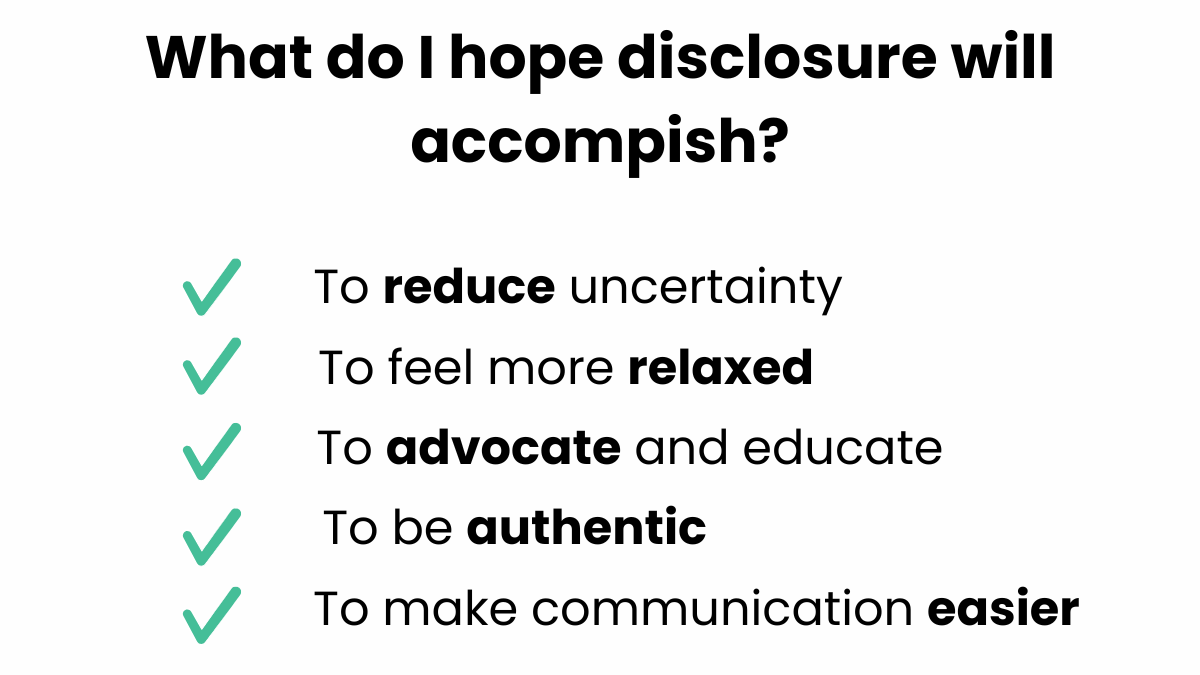
Reasons Someone Might Choose to Disclose
People disclose for many different reasons. Here are a few common ones.
To Reduce Uncertainty
Sometimes people don't want the interviewer wondering what's happening if they begin to stutter. A brief explanation can answer that question right away and allow both people to move forward with the conversation.
To Feel More Relaxed
For some people, acknowledging their stuttering reduces pressure. Once it's out in the open, they no longer feel like they have to hide it or wonder whether the interviewer has noticed. That can make it easier to focus on the interview itself.
To Advocate and Educate
Disclosure can also be an opportunity to increase understanding. Many people have never met someone who openly talks about stuttering. A brief conversation may help the interviewer better understand what they are hearing and could even change how they think about stuttering in the future.
To Be Authentic
Some people decide to disclose because they don't want to spend the interview monitoring or trying to hide their stuttering. Instead, they want to put their energy into the conversation itself.
To Make Communication Easier
Sometimes disclosure is simply practical. You might let someone know that they may hear repetitions, prolongations, or blocks, or that you may occasionally need a little extra time to finish a thought.
But Maybe Your Goal Is Different
Sometimes people assume that disclosure is always the brave or correct choice. I don’t see it that way. Your goal may simply be to get through the interview, share your experience, highlight your qualifications, and have a meaningful conversation. That’s okay too. Whether or not to disclose is a personal decision. The right choice is the one that reflects what matters most to you in that moment.
A Very Real Concern
One reason many people hesitate to disclose is concern about discrimination. The Americans with Disabilities Act offers employment protections to qualified people whose disability substantially limits a major life activity, such as speaking. Even with those protections, disclosure remains a personal decision. Unfortunately, stigma around stuttering still exists. One question I sometimes encourage people to consider is this:
If someone responds negatively to my stuttering, what might that tell me about the environment I would be working in?
Only you can decide how that question fits into your own decision-making.
If You Decide to Disclose
If disclosure feels like the right choice for you, it doesn't have to be complicated.
Something simple can be enough:
"I just wanted to let you know that I stutter."
"You may hear repetitions, prolongations, or blocks while I'm speaking."
"If you need me to repeat something, just let me know."
There's no perfect script. The goal isn't to give a speech about stuttering. It's simply to share information if you think it will help the conversation.

One Suggestion
If I could offer one suggestion, it would be this: Don't apologize. You're not apologizing for your stuttering. You're simply sharing information. That distinction matters.
A Personal Thought
Job interviews have never been one of my strengths either. I’ve even taken interview classes because I wanted to feel more comfortable and prepared. So I understand why interviews can feel stressful.
Thinking ahead about disclosure can be one way to feel a little more prepared walking into the conversation. Whether you decide to disclose or not, I hope your decision feels intentional. There isn't one right answer. The goal isn't to speak perfectly. It's to communicate in a way that feels authentic to you.