When we hear someone stutter, it can be difficult to know what to do. But what if we don’t need to respond to the stuttering at all?
Our Instinct Is to Help
When we see someone carrying a heavy box, our instinct is to step in. Helping is part of being human and one of the ways we show people we care. That same instinct can appear when someone stutters. We want to make the moment easier, so we look for something helpful to say or do. But speaking isn't quite like carrying a heavy box. Sometimes stepping in doesn't make the task easier.
The Advice We Commonly Give
Many people respond with suggestions like:
Slow down.
Take a breath.
Relax.
Start over.
Think about what you want to say.
These well-meaning but misguided comments interrupt the conversation. When the focus shifts to the speech pattern, the message can get lost.
When Helping Adds to the Struggle
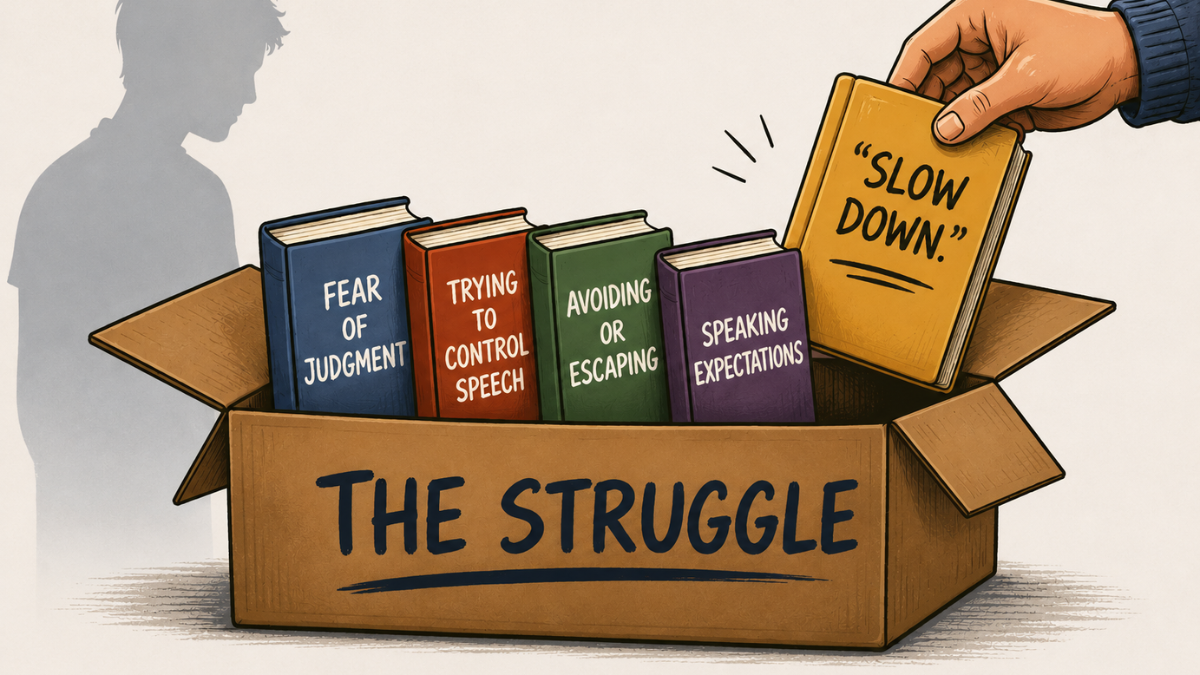
People often think stuttering is the struggle, but people who stutter will tell you that's only part of the experience. The struggle grows from everything surrounding the stuttering: the pressure to hide it, the effort to control it, the fear of being judged, and the feeling that speaking has to be done a certain way.
When we jump in with advice, we can unintentionally add to that pressure. Instead of focusing on the conversation, the person who stutters is also trying to meet someone else's expectations about how they should communicate.
That extra pressure becomes part of the struggle.
Trust Changes the Conversation
What if, instead of asking,
"How can I help?"
we asked,
"How can I show this person that I am listening, and that I trust them to talk?"
Trust communicates something very different.
It says:
I believe you're capable.
I don't need you to speak differently for me.
I'll give you the time you need.
I won't finish your sentences.
I won't rush you.
I'll stay with you in the conversation.
Trust doesn't necessarily reduce stuttering. It reduces struggle.
Why?
Because trust removes pressure instead of adding to it. As listeners, we don't need to take responsibility for someone else's speech. In fact, when we let go of that responsibility, we create space for the speaker to communicate in the way that works for them. Speech belongs to the speaker. Listening belongs to the listener.
What Can We Do Instead?
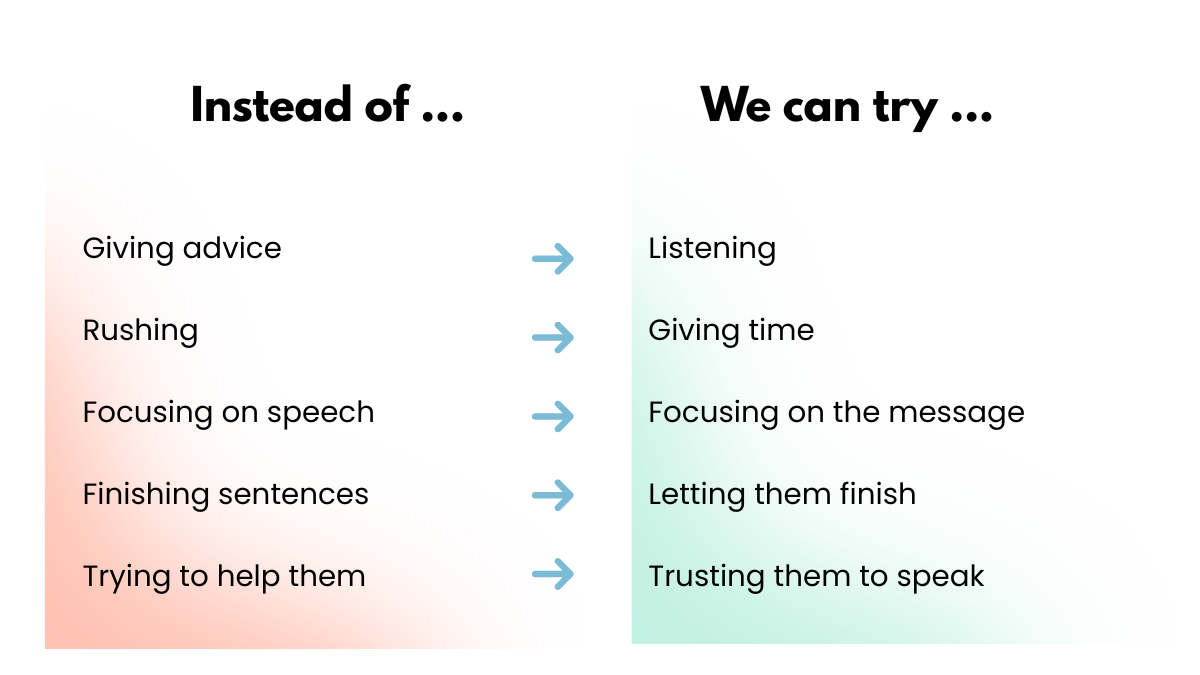
Instead of trying to make speech easier, we can focus on making communication easier.
We can:
Listen with patience.
Maintain natural eye contact.
Respond to the message instead of the stuttering.
Give them time.
Stay engaged.
Trust the speaker to lead their own communication.
These aren't techniques for creating fluency. They're ways of reducing pressure and making conversation feel safer.
Speech belongs to the speaker. Listening belongs to the listener.
Final Thoughts
The next time someone starts to stutter, we don't have to find the perfect thing to say.
Sometimes the greatest gift we can offer isn't advice. It's trust.
I trust you to talk. You can trust me to listen.