Are You Stuttering… or Struggling?
Stuttering and struggling are not the same thing. They're connected, but they're different. And for many people, the hardest part of living with stuttering isn't actually the stuttering itself. It's the struggle that develops around it.
What is stuttering?
When most people think about stuttering, they think about the parts they can hear.
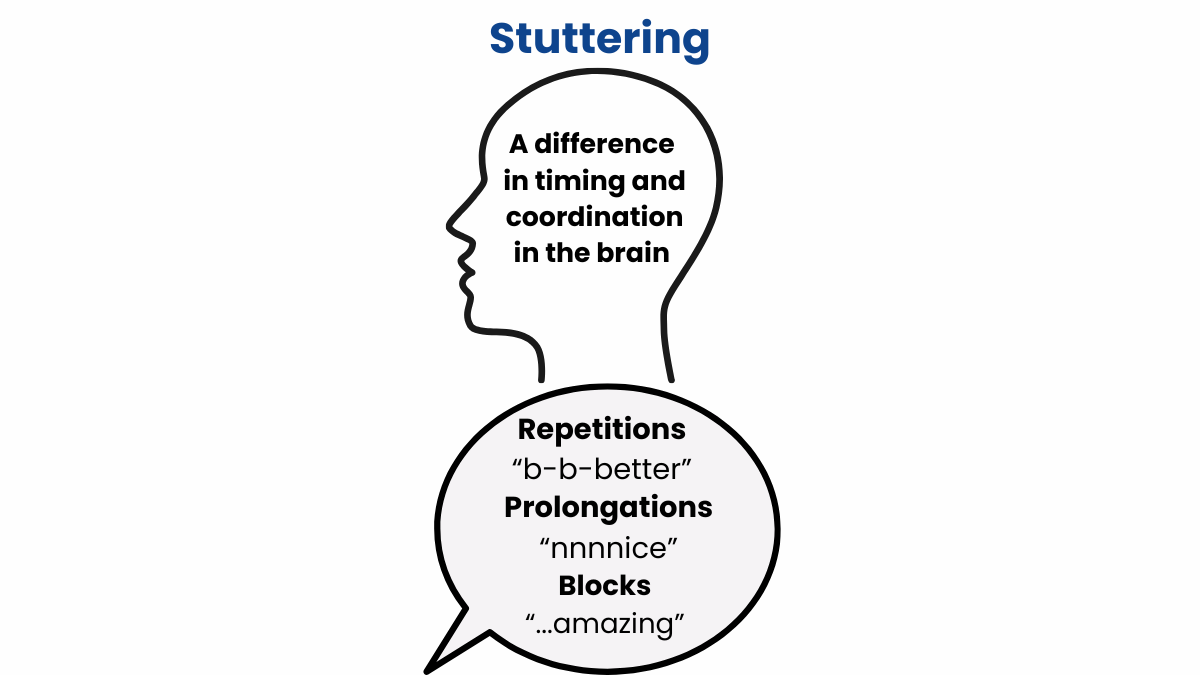
Repetitions ("b-b-better")
Prolongations ("nnnnnice")
Blocks (when a word seems temporarily stuck)
These are the outward characteristics of stuttering.
Today, we understand that stuttering is a difference in speech timing and coordination in the brain. It isn't caused by nervousness, talking too fast, or doing something wrong. It's a natural way that speech happens for some people.
What is the struggle?
While stuttering refers to the speech differences themselves, struggle is everything that can develop around the experience of stuttering.
It can include:
Thoughts and feelings
Fear and pressure
Physical tension
Changing or avoiding words
Avoiding situations altogether
None of these things are stuttering. They’re understandable responses to the experience of stuttering.
Where does the struggle come from?
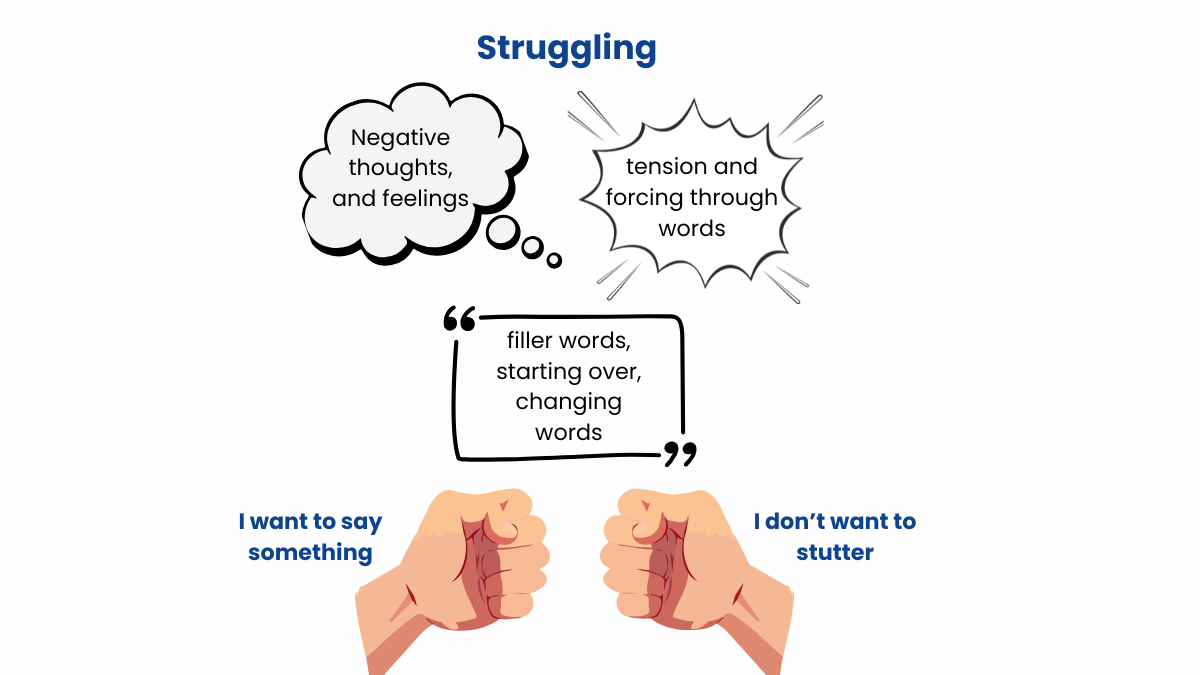
I often think of it as a battle between two very human thoughts:
👊 I have something I want to say.
👊 I don't want to stutter.
Those two thoughts push against each other. And in the space between them, we may do things in an effort to avoid the moment of stuttering or get through it more quickly.
Maybe we:
push harder
tense our jaw or neck
blink
look away
restart sentences
substitute easier words
decide not to speak at all
Speech-language pathologists sometimes call these secondary behaviors or physical concomitants. Those are clinical terms, but they're simply describing all the extra things that can develop around stuttering over time.
Why does this happen?
Some of the struggle develops from our own reactions to stuttering. A moment of stuttering may bring frustration, surprise, embarrassment, or pressure. Over time, those reactions can begin to shape how we feel about speaking.
But some of the struggle also develops through other people’s reactions. Being interrupted, rushed, teased, corrected, or having someone finish our sentences can make speaking feel unsafe, embarrassing, or unwelcome. Over time, those experiences can deeply affect how we feel about speaking and what we begin to expect from communication.
The Iceberg of Stuttering
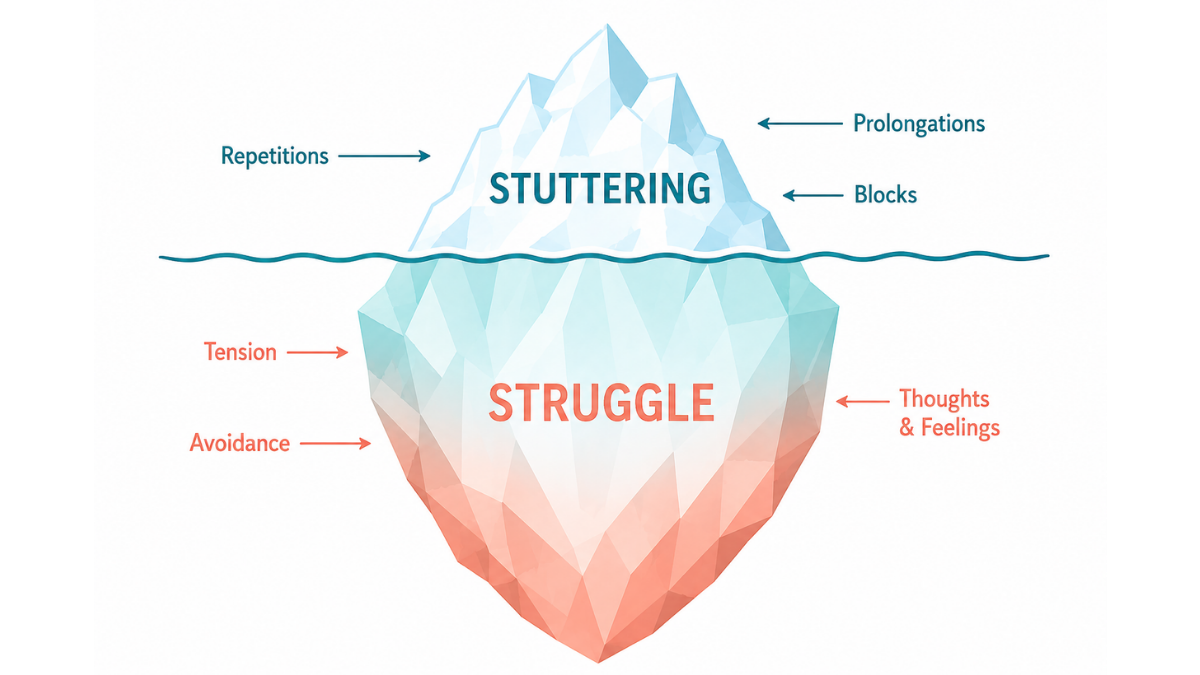
One of the most helpful ways to understand this idea is through the Iceberg of Stuttering, first described by psychologist Joseph Sheehan, who also stuttered.
Above the surface are the parts of stuttering that other people can hear or see:
Repetitions
Prolongations
Blocks
Below the surface are many of the experiences we've been talking about:
Thoughts and feelings
Fear and pressure
Physical tension
Changing or avoiding words
Avoiding situations altogether
For many people, it's the hidden part of the iceberg that causes the greatest distress. While others may only notice the stuttering itself, the struggle beneath the surface is often much larger.
When struggle becomes the biggest obstacle
Sometimes the struggle grows so large that it begins changing our lives. Instead of saying what we want to say... we stay quiet.
Over time, this can mean:
missed conversations
missed relationships
missed opportunities
less participation in the things that matter most
And that's often far more limiting than the stuttering itself.
There is another way
Understanding the difference between stuttering and struggling can change how we think about therapy.
For young children, one goal is to prevent struggle from developing. By creating supportive environments and reducing unnecessary pressure, we can help children understand that it is okay to stutter.
For teens and adults, therapy often focuses on gradually reducing struggle, increasing understanding, and helping communication feel more authentic and confident in everyday life.
The goal isn’t to hide or cure stuttering. The goal is to help the struggle stop making so many decisions.
One final thought
If there's one thing I hope you take away, it's this:
Stuttering may be part of someone's life. But the struggle doesn't have to take up so much space.
Whether we're parents, spouses, friends, or people who stutter ourselves, understanding this difference between stuttering and struggling, is often the first step toward changing the conversation.
Understanding Stuttering Series
This article is part of our Understanding Stuttering series. If you'd like to learn more, these articles build on one another:
What Is Stuttering?
Why Does Stuttering Change So Much?
What Causes Stuttering?
Are You Stuttering or Struggling?